Portland summers bring out a lot of insects, and beetles make up a surprisingly large share of what homeowners find crawling across floors, inside closets, and around windowsills. Beetles in Oregon don’t all get in the same way, and they don’t cause the same problems. Some are nuisance wanderers that blundered inside and want to leave. Others quietly damage fabric, wood, or pantry goods for weeks before anyone realizes something is wrong.
Carpet Beetles Are the Most Common Culprit
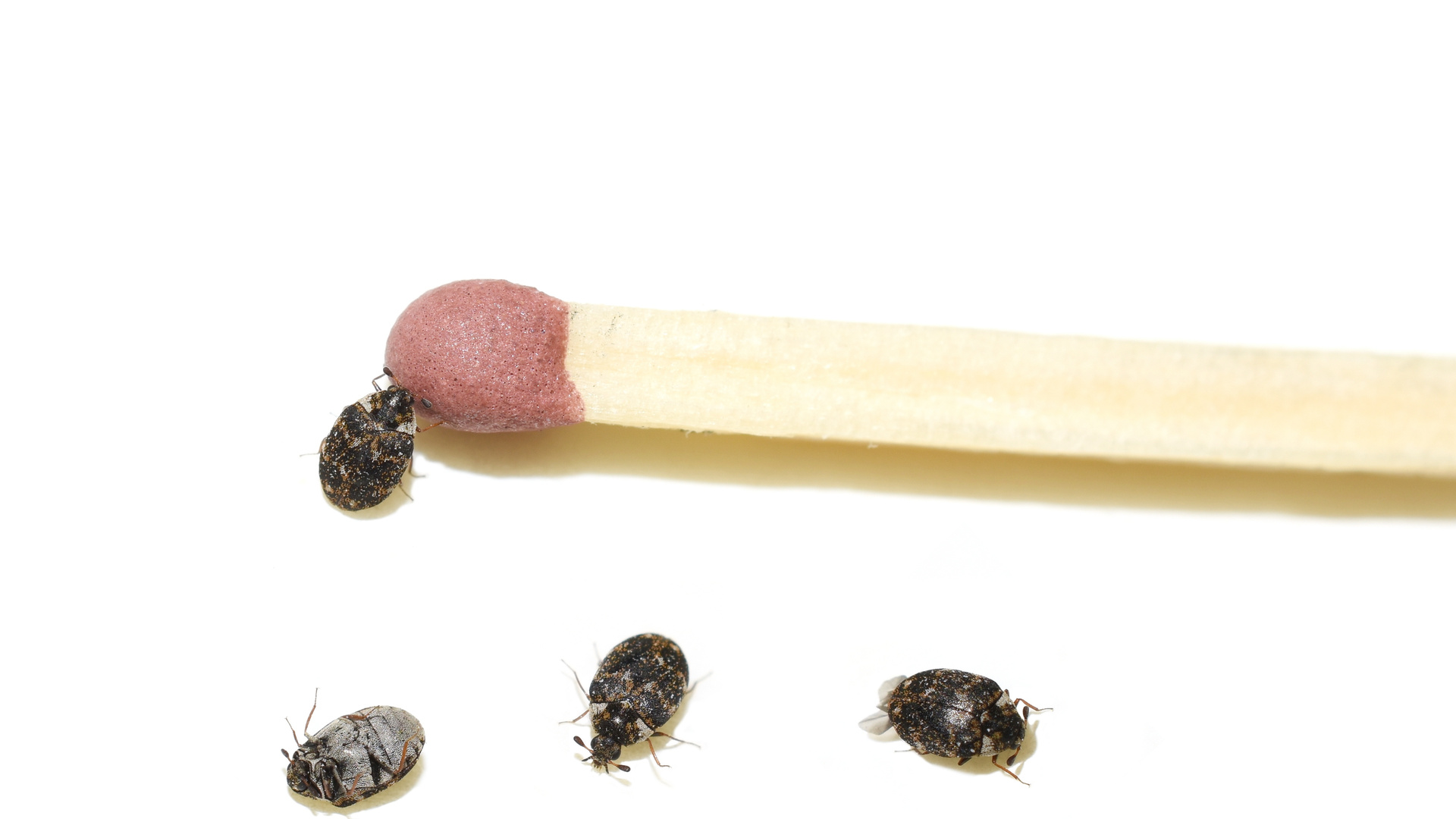
Of all the beetles that turn up in Portland homes, carpet beetles show up most reliably and cause the most overlooked damage. Adults fly in from outside; it’s what they leave behind that creates the problem.
What Carpet Beetles Damage
Carpet beetles in Oregon are small; most adults stay under 4mm, and adults actually spend their time outside on flowers. The damage happens indoors when adults fly through open windows or doors, find a place to lay eggs, and the larvae start feeding. The larvae are the problem; they’re hairy, slow-moving, and work through animal-based materials.
That includes wool, silk, leather, down, pet hair, and certain dried pantry goods. By the time most homeowners spot the damage, the larvae have been at it for weeks. A few things to look for:
- Irregular holes in wool sweaters, blankets, or upholstered furniture
- Shed larval skins in closet corners or under rugs
- Droppings near damaged material, small enough to look like grit
- Adult beetles near windows trying to get back outside
Carpet beetle activity in Portland picks up in late spring and holds steady through summer. Homes with pets, older wool rugs, or dry goods stored in loosely sealed containers give them more to work with. If you find the adults but not the larvae, the feeding site is still somewhere in the home.
Ground Beetles That Wander Indoors
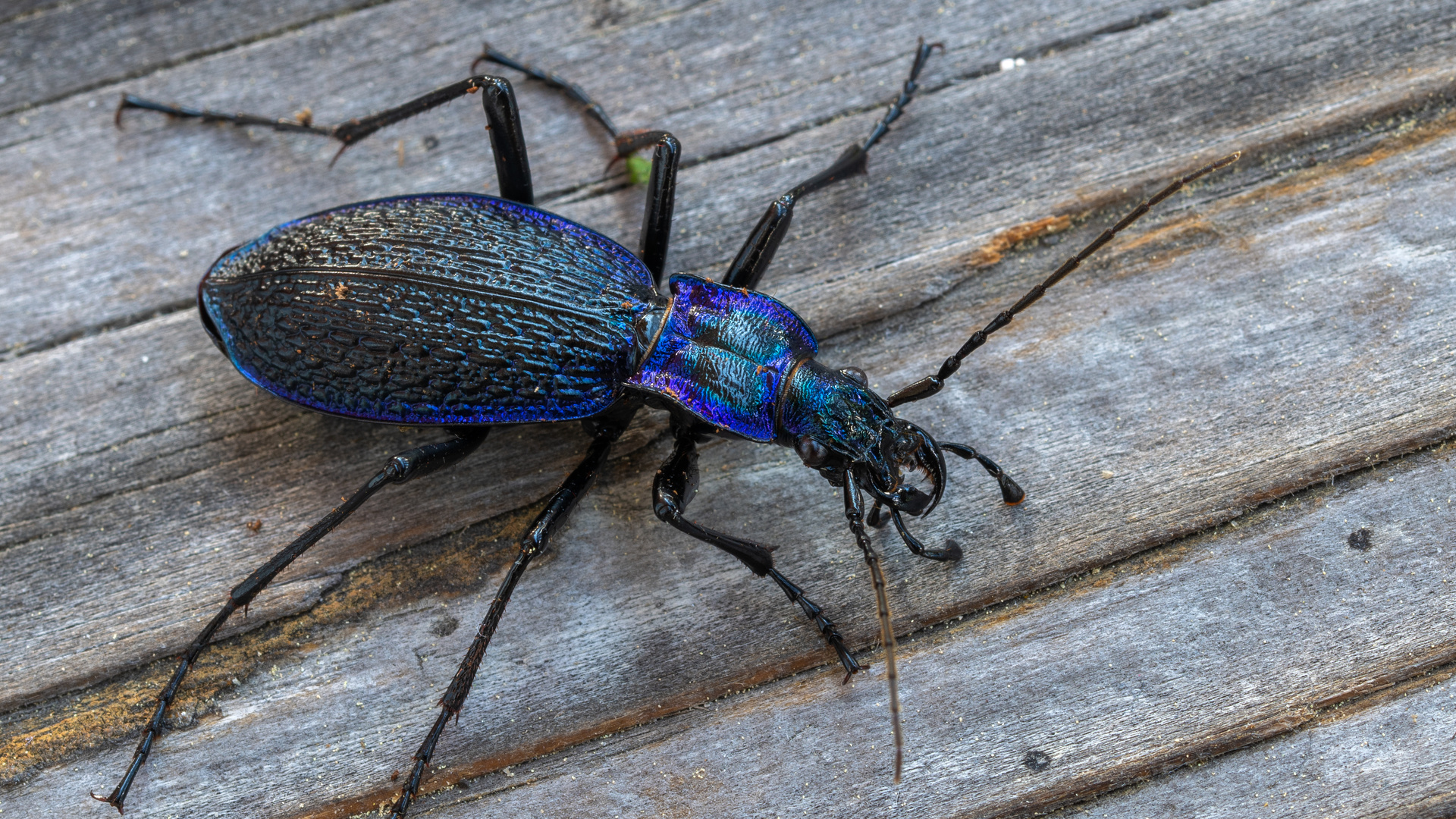
Ground beetles are a common fixture in Portland gardens and yards. Most homeowners only encounter them when one wanders inside, usually in the middle of summer.
Why They Come Inside in Summer
Ground beetles are outdoor hunters; they live in soil and leaf litter and prey on other insects. Most of the species you’ll find in the Portland area are black, shiny, hard-bodied, and fast-moving when disturbed. They don’t eat fabric or wood, they don’t breed inside, and they’re not after food stored in your kitchen.
Finding one or two on the basement floor in July or August is common and not a signal of infestation. A single ground beetle that wandered in through a gap near a door or utility entry usually isn’t worth treating. Where it gets more interesting is when multiple ground beetles keep showing up in the same spots; that sometimes points to gaps in the home’s exterior that other pests use too.The beetles themselves are a low concern; the entry points they’re using may not be.
Most ground beetle intrusions follow the same pattern: warm nights drive them toward light and warmth, and any gap at ground level gives them a way in. Sealing those gaps matters more than treating for the beetles themselves.
Wood-Boring Beetles and Wood Damage
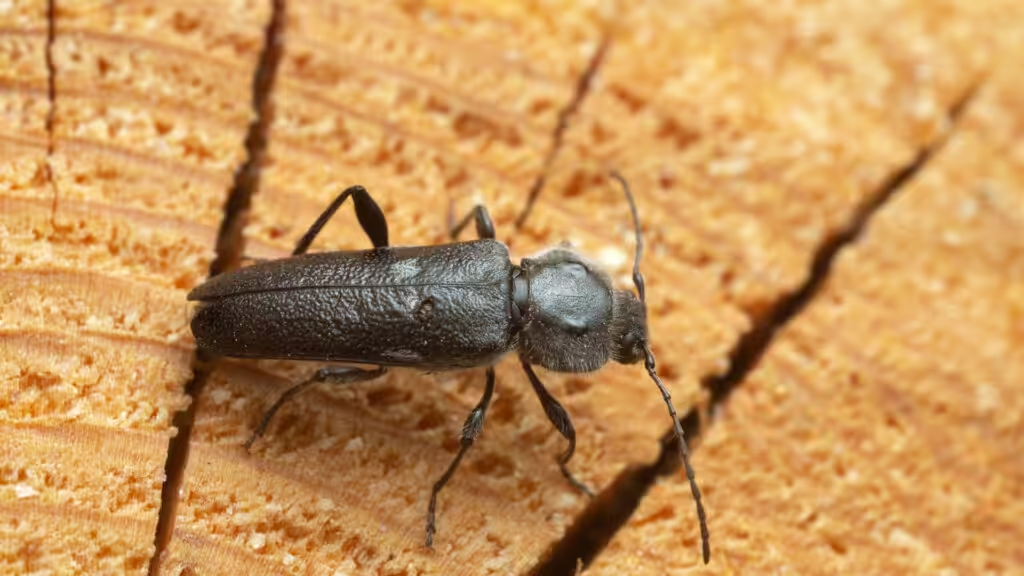
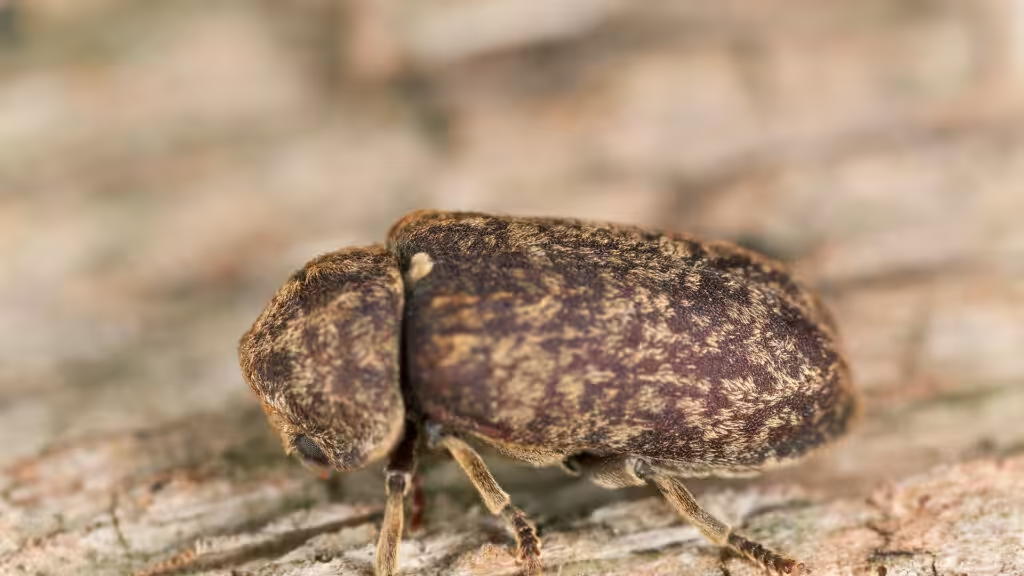
This is the category worth paying the most attention to. Unlike carpet beetles or wandering ground beetles, wood borers cause structural damage, and it builds quietly while everything looks fine from the outside.
Signs of Active Wood-Boring Beetles
Wood-boring beetles cause actual structural damage. Adults lay eggs in wood, larvae tunnel through it to feed, and that damage builds silently over months or years. Our
wood-boring beetle service page covers treatment options, but for identification purposes, the species found most often in Oregon homes are powderpost beetles and old house borers.
Powderpost beetles leave behind fine, flour-like powder at exit holes. The holes are circular and typically run between 1/32 and 1/8 inch across. Old house borers produce larger oval holes with coarser frass (the granular waste beetles leave as they tunnel through wood). Both prefer hardwood, and older homes with original wood framing or unfinished wood in crawlspaces and attics are the most common targets.
The thing that trips people up: visible exit holes mean adults have already emerged from that section of wood. The larvae may still be active in other areas, or that generation may have cycled out entirely. Telling the difference requires a hands-on look; the exit holes alone don’t say whether the infestation is current or historical. That’s why we always inspect before recommending a treatment path.
Stored Product Beetles in Your Kitchen
Stored product beetles are a pantry problem, and most people don’t know they have them until the infestation is well established. The source is usually the product itself, not the kitchen.
Where They Hide in Pantries
Small beetles showing up around your pantry, inside bags of flour, or near a pet food bin usually means stored product beetles. These are tiny (most species stay under 3mm) and they infest dry goods like grain, cereal, oats, spices, dried fruit, and dry pet food. Most of the time, the infestation started before the product came home; the eggs were already present and developed once conditions were right.
Our stored product pest page goes into the different species, but the indicators are consistent across them: adults in or near food containers, larvae or shed skins mixed into the product, and a musty or off smell from older infested items.
Cleaning out the pantry and tossing infested products clears the source in many cases. What surprises people is how widely they spread once they get going. Stored product beetles move into adjacent containers through small gaps and can infest several items in the same area without anything looking obviously contaminated from the outside.
When to Call for Beetle Control
Not every beetle sighting calls for a service visit. The pattern matters more than any single find.
How We Find the Source
A single ground beetle in the basement doesn’t need a service call. But recurring activity in the same spots, beetles of multiple species showing up at once, visible damage to fabric or wood, or active larvae in food or structural wood; those are worth getting checked.
We find the source before recommending any treatment. A carpet beetle problem that keeps coming back usually means the infestation site hasn’t been removed; the adult flying in from outside is the last step of a cycle that started somewhere inside the home. We run into the same principle with spiders: what’s visible at the surface almost always traces back to something else going on at a deeper level.
With wood-boring beetles in particular, earlier is better. Getting eyes on the damage before adults fully emerge gives us more to work with. If beetles have been showing up regularly or you’re seeing damage you can’t account for, call us at 503-222-7128. We’ll figure out what you’re dealing with before anything else.
Areas we serve: